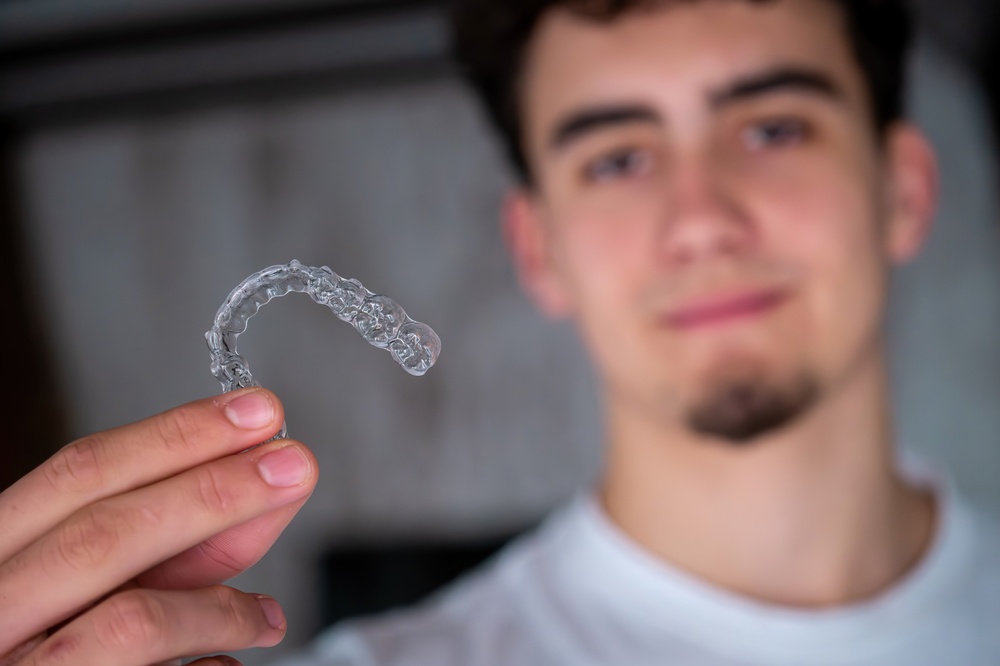
Invisalign for adults works differently than teen treatment. Your bite, your bone, and your daily habits have all changed since your first round of braces. Adult Invisalign treatment starts from a different biological baseline than the orthodontic treatment you had as a teenager. If your teeth drifted back into old patterns, you are not imagining it, and understanding why can help you know what to expect before your first appointment.
Key Takeaways
- Adult jaw bones are fully developed, so treatment works with a fixed skeleton instead of active growth.
- Most adults returning for aligners are correcting a documented relapse, not a brand new problem.
- Gum health plays a bigger role in adult treatment planning than it did in the teen years.
- Wear time is entirely up to the adult patient, with no growth spurt to make up for it.
- Getting the treatment plan right the first time matters more when bone remodeling is slower.
Difference 1: Your Jaw Has Stopped Growing, and That Changes Everything
Teen treatment can lean on active jaw growth to reshape the arch. Adult treatment cannot, since the skeletal structure is already set.
How Teen Jaw Growth Once Helped Treatment
A maxillary palatal expander widens the arch by working with active growth, not against it. That same appliance can also create space for tooth eruption before permanent teeth fully settle. The growth stage is not just a backdrop for teen treatment. It is a clinical tool providers actively use.
What Changes Once Growth Stops
By adulthood, the growth plates fuse, and long bone growth ends. Researchers describe this as leading to complete cessation of human growth. The jaw bones follow a similar pattern of skeletal maturation. By then, facial structure locks into place.
This shift affects several things a provider once relied on:
- Bone density stabilizes instead of continuing to develop
- Dental growth has already finished shaping the arch
- Tooth movement now depends on remodeling, not growth
Tooth movement is still achievable in a mature jaw. It simply happens through a slower biological process than the one teenage bones allow.
Difference 2: You Are Correcting a Known Problem, Not Starting Over
Most adults returning for orthodontic treatment already have a documented history. That history changes how the provider approaches the case.
Why Relapse Happens After Braces
A peer-reviewed survey of adult retreatment patients traced original treatment failings back to poor treatment, maturational changes, and inadequate retention. Skipping retainers after the first round of orthodontic appliances is one of the most common causes.
What This Means for Your Treatment Plan
Because providers usually know the cause, the treatment process looks different than a first-time case. Common triggers a provider will ask about include:
- Retainers stopped too early after the original treatment ended
- Natural aging shifted teeth slowly over several years
- A skipped dental check-up let a small relapse go unnoticed
When treatment restarts, the provider typically corrects a predictable shift rather than solving a brand-new dental concern.
[IMAGE PLACEMENT intent=”before and after view of mild crowding corrected with clear aligners” type=”section” avoid=” graphic dental imagery, surgery, blood, needles”]
Difference 3: Your Case Type Is Probably Simpler Than You Think
Not every adult case looks the same, but most share a similar pattern. That pattern is usually more limited than a first-time correction.
Which Cases Respond Best to Aligners
A literature review of clear aligner treatments found the system is convenient for mild to moderate crowding or diastema closure. That profile matches what most adult patients bring to their consultation.
What This Means If You Had Braces Before
Crowded teeth that drifted back over the years fall into this category. So do small gaps that reopened after retention lapsed. Common adult presentations include:
- Mild to moderate crowding along the front teeth
- Reopened spacing or diastema after retention lapsed
- Occasional open bite or minor alignment issues
Adult treatment tends to be narrower in scope than teen treatment. Adult teeth usually need targeted correction rather than a full first-time realignment.
Difference 4: Your Gums Are Part of the Conversation Now
Gum health was rarely a factor during teen orthodontic treatment. For adults, it becomes central to the treatment plan.
Why Gum Health Gets More Attention Now
Gum disease and bone loss along the gum line can affect how tooth movement proceeds. If left untreated, active gum disease needs attention before any clear aligner treatment begins. Providers treat dental check-ups and deep cleanings as clinical prerequisites, not optional extras.
The Hygiene Advantage of Removable Aligners
A survey of 200 orthodontic patients found satisfaction rates of 92% for clear aligners and 76% for braces. Researchers linked part of that gap to easier oral hygiene. Removable plastic aligners support better dental care in a few clear ways:
- Aligners come out for normal brushing and flossing
- Tooth decay risk drops without brackets trapping plaque
- Dental health stays easier to monitor at home
Fixed metal braces or lingual braces keep the same tissue covered around the clock. That makes it harder to manage existing dental issues.
Difference 5: Nobody Is Making You Wear Them Anymore
Teen braces worked whether the patient cooperated or not. Adult aligners depend entirely on consistent wear.
Why Teens Had a Built-In Advantage
Growth and compliance worked together during adolescence, so minor wear gaps mattered less. Fixed orthodontic appliances applied constant pressure without any input from the patient at all.
What Compliance Looks Like for Adults
Compliance research on clear aligner therapy defines full compliance as a minimum of 22 hours of wear per day. Teeth straightening treatments using replacement aligners only work when they stay in the mouth. Adults gain some flexibility in exchange:
- No dietary limitations since aligners come out to eat
- Removable design fits around a busy daily schedule
- Full responsibility for hitting the daily wear target
Every hour spent outside the mouth is an hour without pressure on the teeth. That is why consistent wear matters more when you don’t have growth to compensate.
Difference 6: The First Set of Aligners Carries the Most Weight
Invisalign builds every aligner plan around a digital simulation of how teeth should move. For adults, getting that plan right from the start matters more than most people realize.
How the Digital Plan Gets Built
A digital scan feeds directly into the aligner system that produces each custom treatment sequence. Orthodontic patients rarely see this step, but it determines nearly everything that follows.
Why the First Set Matters So Much
A study on deep bite correction found that most overbite correction occurs during the 1st set of aligners. Later refinement rounds add comparatively little. This matters because:
- Teenagers have more bone turnover to offset small planning gaps
- Adult bone remodels more slowly and forgives less
- A precise first set reduces the need for extra rounds
An experienced provider reviews the simulation carefully before producing that first set.
Difference 7: Small Planning Gaps Matter More at Your Age
Even a well-built digital plan does not always match what teeth do in the mouth. That gap has a bigger impact on adult cases.
What Happens When the Plan Does Not Match Reality
Research on general tooth movement puts the average predictability of general tooth movements at about half of what was planned. For a teenager with years of growth ahead, continued development can naturally offset some of that shortfall.
Why This Adds Time to Treatment
For an adult, the same gap represents a larger share of the total goal. That gap tends to show up as:
- Treatment delays when the plan overestimates movement
- Extended treatment time from added refinement rounds
- Slower treatment speed compared to the original estimate
An accurate initial plan supports fewer office visits and keeps the treatment timeline closer to what the provider first discussed.
Your Invisalign for Adults Questions, Answered. Now what?
Invisalign for adults asks more of your daily habits than most people expect, but it works with your bite, not against it. A fixed jaw, existing gum concerns, and self-directed wear time are simply the factors your provider accounts for.
None of these seven differences are reasons to avoid treatment. These are the details a provider like Dr. Sandhya Hegde at the Center for Dental Health La Jolla weighs before building your plan. If you have questions about your own case, contact our team today, and we’ll help you figure out the right next step.
FAQs
How much is Invisalign for adults?
Pricing is one of the biggest questions adults ask before committing to treatment, and it’s rarely a flat number. Providers typically build a quote after reviewing your bite, your dental history, and any prior orthodontic work, since retreatment cases can look different from first-time corrections. Many practices also offer financing or payment plans to spread the cost over the length of treatment. A consultation remains the most reliable way to get a number specific to you.
Does Invisalign work for adults?
Adults sometimes worry that orthodontic treatment is something they missed their window for, but that isn’t the case. Clear aligners are designed to work with a fully formed adult bite rather than a still-developing one, which is actually part of what makes outcomes more predictable. Your provider will confirm candidacy during an exam that checks your bite, your gum health, and your treatment goals before recommending a specific plan.
Is Invisalign worth it for adults?
Whether treatment is “worth it” usually comes down to how much crowding, spacing, or a shifted bite affects your daily life. Many adults find that correcting these issues improves both confidence and simple daily habits like chewing or cleaning between teeth. It’s a personal decision that depends on your goals, your budget, and how much flexibility you want during treatment.
Is Invisalign better than braces for adults?
There isn’t a universal answer, since the better option depends on what your bite actually needs. Some adults value the discretion and flexibility of a removable system, while others need the more constant pressure that fixed braces provide for complex movements. A provider who examines your case directly can tell you which system will realistically get you to your goal faster and with fewer surprises.
How many adult teeth do you need for Invisalign braces?
This question often comes up for adults who are missing teeth or waiting to have wisdom teeth addressed. A full set of adult teeth is generally required before treatment starts, since the system is designed around a complete, permanent dentition. If you’re missing teeth or unsure whether wisdom teeth will interfere with your plan, your provider will sort out those details at your first visit.
Citations/Sources:
- https://www.ncbi.nlm.nih.gov/pmc/articles/PMC5798587/
- https://www.sciencedirect.com/science/article/abs/pii/S0889540620302869
- https://pmc.ncbi.nlm.nih.gov/articles/PMC7018497/
- https://www.ncbi.nlm.nih.gov/pmc/articles/PMC12697465/
- https://pmc.ncbi.nlm.nih.gov/articles/PMC8303492/
- https://pmc.ncbi.nlm.nih.gov/articles/PMC10943900/
- https://pmc.ncbi.nlm.nih.gov/articles/PMC10943900/