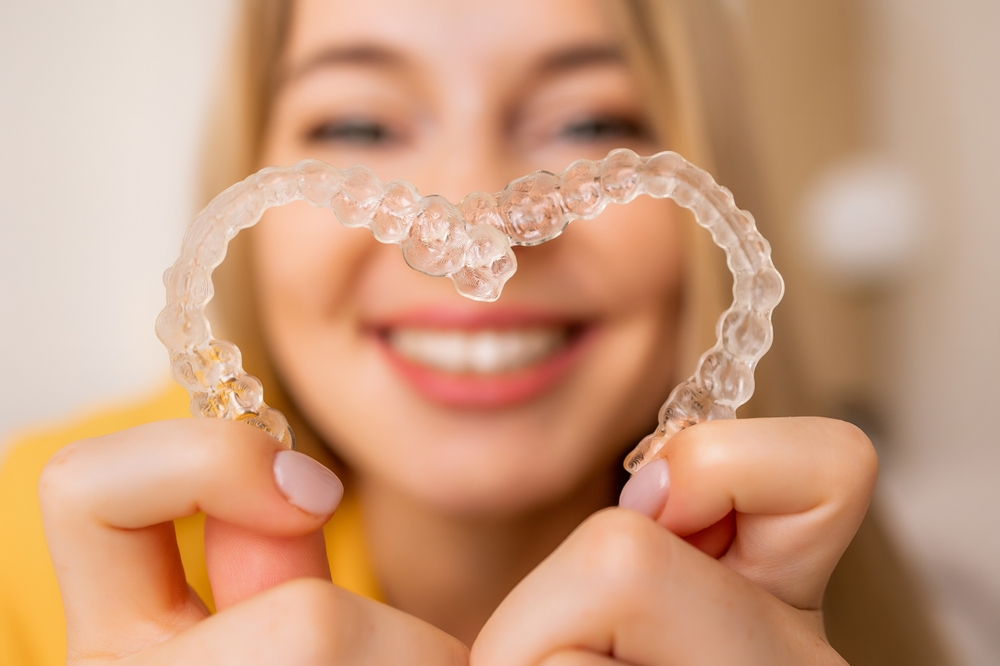
Braces or Invisalign, the appliance most patients focus on, plays a smaller role in your timeline than case complexity does. A 5-year cohort study confirms that hardware type has little bearing on how fast treatment finishes. Case severity decides the real treatment timeline, not the appliance you pick.
Some cases move quickly no matter which orthodontic options you choose. Others run long regardless of the appliance. Understanding what actually drives your timeline helps set realistic expectations before dental care even begins.
Key Takeaways
- Case complexity, not appliance type, determines how long orthodontic treatment actually takes.
- Mild to moderate crowding can be treated in similar time frames with either braces or aligners.
- Deep bite correction often needs extra aligner refinement rounds, which can extend treatment.
- Compliance history affects how closely your actual timeline matches the original estimate.
- Periodontal health and jaw growth can add time before treatment even begins.
Orthodontic Treatments And Treatment Duration: What Actually Drives The Timeline
Orthodontic treatments vary widely in scope, and treatment duration varies with it. A 5-year retrospective cohort study of 200 patients examined clear aligner therapy and fixed appliances. Results showed no significant differences in treatment duration between the two. The appliance itself was not the deciding factor here. Case severity carried far more weight.
A literature review confirmed that clear aligners produce results comparable to metal braces for patients with mild to moderate crowding or diastema. For those cases, 12 months is a realistic target with either appliance.
Does appliance type change how long treatment takes?
For mild to moderate cases, appliance type does not meaningfully change the timeline. Case complexity remains the deciding variable, not whether a patient wears metal brackets or removable trays.
The day-to-day rhythm of treatment does differ between the two orthodontic options:
- Metal braces need adjustment appointments every four to six weeks.
- Aligner trays get swapped every one to two weeks at home.
- Braces stay fixed, so tooth movement continues around the clock.
- Providers space aligner check-ins further apart than brace visits.
How Daily Comfort And Mouth Irritation Compare
Comfort is where patients notice the biggest day-to-day difference, even though it rarely changes the clinical timeline. Metal brackets and wires can irritate your mouth, especially in the first weeks after placement or after an adjustment.
Aligners typically feel gentler on soft tissue, though a poorly trimmed tray edge can create localized discomfort. A few habits make either appliance easier to live with:
- Rinse with warm salt water after adjustments to ease soreness.
- Use orthodontic wax over brackets that rub the cheeks.
- Keep up dental hygiene between adjustment appointments to avoid buildup.
- Switch aligner trays at night, so initial pressure eases while you sleep.
Teeth alignment outcomes for straightforward cases stay comparable across both systems. The real split shows up in cases that go beyond simple crowding, especially when correction requires vertical movement.

Bite Correction And Vertical Movement: Where Clear Aligners And Traditional Braces Diverge
Bite correction involving vertical movement produces the most different timeline outcomes between the two appliances. Reducing a deep overbite is one of the harder bite problems for clear aligners to resolve on schedule.
Research on overbite reduction found that clear aligners achieved 39.2% of the prescribed overbite reduction compared to the digital simulation. That means teeth moved less than two-fifths of what the software predicted.
When the first aligner series falls that short, providers order refinement aligners. Those extra sets push the timeline from the 12-to-18-month range toward 18 to 24 months or longer.
A retrospective study of 20 deep bite patients showed where correction actually happens. Most of the overbite correction occurs during the 1st set of aligners. Each additional set delivers less improvement than the previous one.
Patients who need two or three rounds of refinement spend months in treatment with diminishing returns on bite improvement.
Why Bite Mechanics Matter for Timeline Projections
Bite mechanics determine how predictable a treatment timeline will be. Cases with deep bite problems, open bite issues, or vertical discrepancies most often need refinement rounds.
Traditional braces offer more direct control over vertical movement. Fixed metal brackets let the orthodontist adjust torque and angulation at each tooth. This control keeps complex bite correction timelines closer to the original estimate.
When Refinement Aligners Become Necessary
Not every aligner case needs refinement, but certain signs point toward extra sets. Providers typically recommend refinement aligners when:
- The initial overbite measured 4mm or deeper before treatment started.
- Fewer than half the planned tooth movements tracked with the simulation.
- Bite contacts still feel uneven after the last tray in the series.
- Alignment issues remain visible in the front teeth at reassessment.
Clear aligners are not the weaker option across the board. For cases where bite correction isn’t the main goal, they perform on par with braces. Patients needing significant vertical movement should plan for possible refinement rounds before they start.

Treatment Planning, Periodontal Health, And Jaw Growth: The Hidden Timeline Factors
Treatment planning sets the projected timeline, but several hidden factors can push the actual timeline past that projection. Compliance, gum health, and jaw growth all play a role before and during orthodontic care.
How Compliance Affects Your Timeline
For aligner patients, compliance is the biggest variable in treatment planning. Research on adults with a history of prior orthodontic treatment found lower compliance during clear aligner therapy. This group was less compliant than patients without previous orthodontic treatment.
Aligners require 20 to 22 hours of daily wear. When patients fall short, their tooth movement slows, and the gap between projected and actual progress grows over time.
This is what separates the two orthodontic options in practice. Braces move teeth on a fixed schedule because the appliance stays in place. Aligners can finish faster for a compliant patient, but that same removability makes the timeline variable.
A survey of 200 patients found that satisfaction reached 92% for clear aligners. Brace satisfaction reached only 76%, even with compliance in the equation. Patients still chose aligners for their removability and appearance, despite that risk.
Periodontal Health And Treatment Planning
Periodontal health adds another layer to treatment planning. Active gum disease affects the bone that holds teeth in place. Orthodontic force on compromised bone can cause further loss.
Patients with untreated gum disease typically need periodontal treatment before orthodontic care can begin. That adds time before your provider places the first tray or bracket. A few habits support healthier gums throughout treatment:
- Brush after meals to limit plaque buildup around brackets or trays.
- Use a water flosser to reach spots a toothbrush misses.
- Keep every adjustment appointment so your provider can catch early inflammation.
- Flag any bleeding or swelling right away instead of waiting.
Jaw Growth Considerations For Younger Patients
Jaw growth matters for younger patients whose jaws haven’t finished developing. Growth patterns can shift the bite during treatment and change what correction the case still needs.
3D digital imaging helps providers assess jaw structure early in dental care, though available tools vary by practice. Accounting for jaw growth at the planning stage reduces the chance of mid-course corrections that extend the timeline.
Braces Or Invisalign: Your Next Appointment Starts The Clock
Braces or Invisalign isn’t really the question that determines your finish line; your case type and follow-through are. Mild to moderate crowding wraps up in a similar window either way. Deep bite correction and inconsistent aligner wear are what push treatment toward 18 to 24 months.
Braces stay on schedule because there’s no daily choice involved, while aligners reward the patients who wear them as directed. Dr. Sandhya Hegde, D.D.S., B.D.S., and our team at Center for Dental Health La Jolla review your case history and daily habits. We also factor in your bite and your goals, so your timeline reflects your case instead of a generic estimate. Contact us to schedule your evaluation and get a straight answer on what your treatment will actually involve.
FAQs
What are All-on-4 dental implants made of?
The four posts are titanium, a metal the body accepts well because it fuses directly with bone. Your temporary arch during healing is acrylic resin, a lighter material meant to hold you over. Once your jaw fully heals, most patients upgrade to a zirconia arch or a metal framework layered with porcelain, and zirconia tends to resist staining and chipping better over time.
Who is a candidate for All-on-4?
Good candidates are generally in stable overall health, since healing depends on blood flow and a normal immune response. Smoking and uncontrolled diabetes can slow healing, so your dentist reviews your medical history closely before moving forward. Age alone rarely disqualifies anyone, since older adults heal well when their jaw supports the implants. Committing to regular checkups afterward matters just as much as your starting bone density.
Are All-on-4 dental implants removable?
Your fixed arch stays anchored to the implants around the clock, and only a dentist can remove it, typically during professional cleanings. This differs from implant overdentures, a separate treatment that snaps onto implants but is designed for you to remove nightly on your own. Because your arch stays fixed in place, you brush and floss it much like natural teeth rather than soaking it separately overnight.
Are All-on-4 dental implants safe?
All-on-4 dental implants carry the same general risks as other oral surgeries, including infection or minor swelling that usually resolves within days. Serious complications are uncommon when an experienced provider plans your case around imaging and your health history. Most complications trace back to skipped aftercare rather than the implants themselves, so choosing a provider who monitors your healing closely lowers that risk even further.
Do All-on-4 implants feel bulky?
Many patients notice a slight fullness against the tongue during the first week or two after placement. Speech may sound a bit different at first, since the tongue needs to relearn where the arch sits inside the mouth. Eating softer foods early on helps you adjust to the new bite before returning to your normal diet. Within a month or two, most people forget the arch is there while eating or talking.