Dental Excellence with Fantastic Results
Part of our patient commitment is to provide a high level of exceptional service with advanced technology each day.
Learn More
A Compassionate and Competent Staff
Your smile is our top priority, our entire team is dedicated to achieving personalized results in the most gentle manner.
Learn More
Meeting Your Preventative and Cosmetic Needs
The team and doctor possess years of experience meeting your cosmetic and preventive dentistry needs.
Learn More








Experience High Quality Dentistry At Our La Jolla Dentist
Finding a dentist in Del Mar families can rely on for oral surgery, root canal treatment, and cosmetic dentistry under one roof means fewer referrals, fewer unknowns, and a care team that already knows your history. Dr. Sandhya Hegde, D.D.S., B.D.S. leads that team at Center for Dental Health La Jolla, serving patients from Del Mar and the surrounding area. These three service areas carry the most questions from new patients, and this page is here to help you work through them before you ever sit in the chair.

Our Mission
The mission at Center for Dental Health La Jolla is straightforward: give every patient searching for dental services what they need, built around their actual dental needs, not a generic script. Dr. Sandhya Hegde, D.D.S., B.D.S. believes dental health is tied directly to your overall health, since untreated infections, gum disease, and even temporomandibular joint disorder rarely stay contained to the mouth. That connection between your mouth and your overall wellbeing guides every appointment here, regardless of how simple or complex the visit turns out to be.
The goal isn’t just clean teeth and a healthy mouth; it’s genuine care that leaves you understood and respected at every visit. This practice is built around personalized dental care, delivered at your own pace, without rushing you through the process or treating you like a number.

Preventive, Cosmetic, and Restorative Dentistry in San Diego
Center for Dental Health La Jolla covers the basics and beyond: exams, x-rays, cleanings, fluoride treatments, dental sealants, cosmetic dentistry, teeth whitening, crowns, and veneers. Dr. Sandhya Hegde also attends dental lectures and conferences to stay current with new developments in the field. Here is what to know about cost, oral health, and what happens at your visit.
What Affects Oral Health Most
Cavities, gum disease, and tooth loss are common issues that get harder to manage over time. Cosmetic dentistry, crowns, veneers, and dental implants are available once health needs are met. Here is what to know before your visit.
Meet the Doctor
Dr. Sandhya Hegde D.D.S., B.D.S. founded Center for Dental Health La Jolla, now a trusted dentist in Del Mar, CA practice, with a clear focus: improve patient health and well-being by connecting oral health to overall physical health. She built the practice around the belief that quality dental care should feel respectful, not rushed, and that every patient deserves a treatment plan built around their specific situation.
Joining her is a team of specialists who bring focused training to the procedures that require it most. Dr. Gary Sigafoos has been practicing periodontics since 1979 and was among the first in the San Diego region to pioneer soft tissue management programs. Dr. Haris Lakisic holds both a D.D.S. and a Master of Science in Endodontics from the University of Pennsylvania, where he graduated magna cum laude. Dr. Thomas Brislin completed his dental training at Temple University School of Dentistry in 2011 and leads oral surgery at the practice. Dr. Abraham Tang rounds out the team as the practice orthodontist.
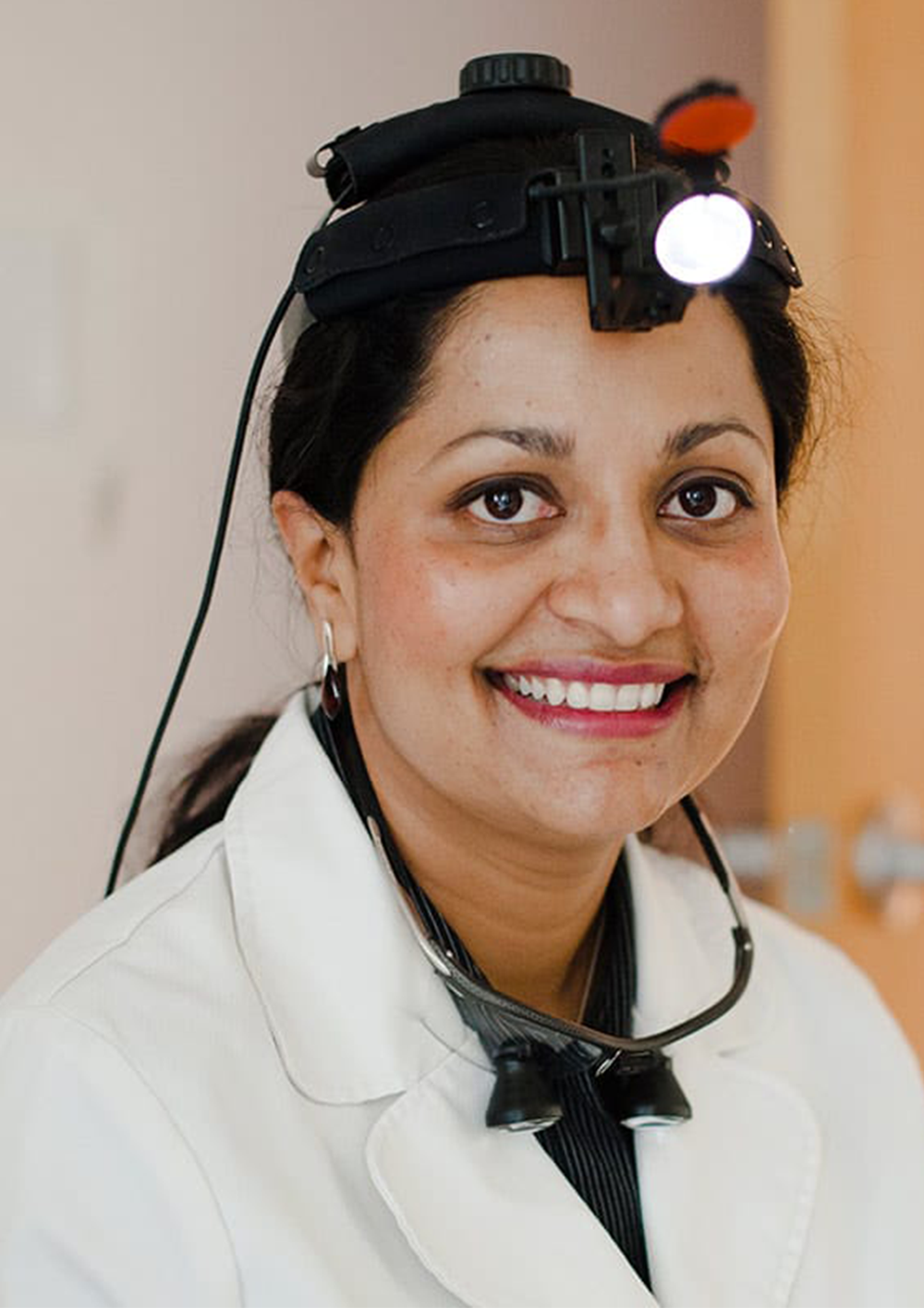
Dr. Sandhya Hegde
Dr. Sandhya Hegde became a dentist so she could make a difference in her patients’ health and well-being. She understands the important role that oral health plays in a person’s overall health, and she wants to help each patient enjoy the best health possible.

Dr. Gary Sigafoos
Dr. Gary Sigafoos received his DDS degree in 1971 and his MS in periodontics in 1977, both from Temple University. He joined our team in 2021, but has been practicing dentistry since 1979. Over the years, Dr. Sigafoos has appeared on multiple local and national television programs for his expertise in periodontics. He was one of the first periodontists in San Diego County to focus on soft tissue management programs.
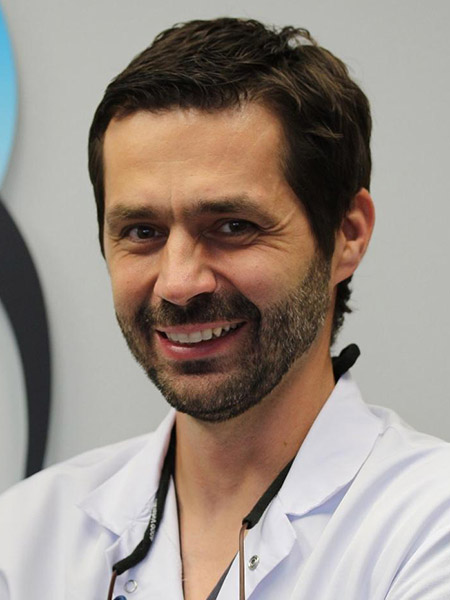
Dr. Haris Lakisic
Dr. Haris Lakisic has an eye for detail and felt that dentistry would be a good fit with his skills. He graduated magna cum laude from Pepperdine University with a bachelor’s degree. in biology. He then received his DDS from the University of Pennsylvania in 2003 and an MS in endodontics from the University of Pennsylvania in 2006.

Dr. Thomas Brislin
Thomas V. Brislin Jr., the youngest of six siblings, grew up in Harveys Lake, Pennsylvania, where he developed a love for sports, excelling in soccer and volleyball and becoming a passionate water sports enthusiast.

Dr. Abraham Tang
Bio coming soon…
Why Choose Us
Choosing a Del Mar dentist your family can count on for years comes down to more than one great appointment. Here are five reasons patients keep choosing Center for Dental Health La Jolla for their ongoing patient care, from routine visits to more complex treatment plans that touch multiple specialties at once.

Oral Surgery
What Del Mar Patients Should Know Before Scheduling
A filling or a routine cleaning can’t fix every dental problem. Some conditions require a surgical approach, and figuring out whether you’re in that category isn’t always straightforward from symptoms alone.
If you’ve been dealing with pain that won’t quit, a tooth your dentist has flagged as unsalvageable, or a referral you haven’t acted on yet, the sections below explain what oral surgery involves and whether it applies to your situation.
Who is a candidate for Oral Surgery?
Patients who need wisdom teeth removed, teeth extracted that can’t be saved, or surgical treatment for bone loss are the most common candidates. People with infections that have spread past the tooth root, those preparing for dental implants, or patients whose gum disease has reached a stage requiring osseous surgery may also qualify.
Your overall health, current medications, and bone density are all factors the surgical team reviews before recommending a specific approach.
What does the Oral Surgery process involve?
Dr. Thomas Brislin performs oral surgery procedures in the office and offers IV sedation for patients who want a deeper level of comfort. Procedures range from single-tooth extraction to removal of impacted wisdom teeth to osseous surgery, which involves reshaping the bone around teeth affected by advanced periodontal disease. Digital imaging is used to assess the surgical site before treatment begins, and most procedures are completed in a single visit.
Where does Oral Surgery fit into your treatment plan?
Oral surgery is typically the point in a treatment plan where a problem can no longer be managed through non-surgical care. For some patients, it comes first, clearing an infection or removing a failing tooth before any restorative work can begin.
For others, it follows a periodontal diagnosis or comes just before implant placement. Specialists coordinate directly with the rest of your care team so the surgical and restorative phases connect without gaps.
When is the right time to consider Oral Surgery?
Earlier is almost always better for oral surgery. Wisdom teeth are easier to remove before the roots are fully developed and before crowding begins to affect neighboring teeth. Infections that require extraction or osseous surgery don’t clear up on their own, and waiting usually increases the scope of treatment needed.
If your dentist has already recommended a surgical consultation, acting on that recommendation sooner keeps your recovery simpler and your options wider.
Why choose Oral Surgery over non-surgical alternatives?
When a tooth is impacted, infected, or too damaged for a crown or filling to fix, surgery is the right clinical response, not just an option. Antibiotics can temporarily slow an infection, but they don’t remove its source, and a failing tooth left in place puts neighboring teeth and bone at ongoing risk.
A prospective study comparing extractions of acutely infected teeth against symptom-free teeth found no meaningful difference in complications, and concluded that acute infection is not a reason to delay extraction for antibiotics.
Postponing Oral Surgery Turns a Manageable Problem Into a Dental Emergency
A localized dental infection does not stay local. When oral surgery is postponed, an abscess can spread into the jaw, neck, or airway, turning a routine office visit into a hospital admission. Bone loss also moves faster when a diseased tooth stays in place, complicating future implant placement.
A retrospective study of impacted wisdom tooth management found that delaying treatment raises the risk of slower healing and nerve damage, especially for older patients with higher rates of diabetes or cardiovascular disease.
Root Canal Treatment
Separating What You’ve Heard From What the Procedure Actually Is
Root canal treatment has a reputation built on outdated information. Modern endodontic care is precise, and for most patients, the procedure itself is no more uncomfortable than getting a filling.
If you’ve been told you need one, or if you have a toothache that hasn’t gone away after a few days, knowing what the process looks like makes it easier to move forward without unnecessary worry.
Who is a candidate for Root Canal treatment?
Patients with infected or inflamed pulp inside the tooth root are the primary candidates. This often shows up as a toothache that doesn’t go away, sensitivity to heat or cold that lingers after the source is gone, or swelling near the gum line.
A cracked tooth that has allowed bacteria to reach the inner chamber may also need root canal treatment. For this treatment to make sense, the tooth needs to be structurally sound enough to be saved after the infection is cleared.
What does the Root Canal treatment process involve?
Dr. Haris Lakisic performs root canal treatment using rotary endodontic instruments, which remove the infected pulp, clean and shape the root canals, and seal the tooth against reinfection.
Most cases are completed in one or two visits, depending on how many canals the tooth has and how much infection needs to be cleared. After the root canal is complete, a crown is placed to restore the tooth’s full function and protect it from future damage.
Where does Root Canal treatment fit into your treatment plan?
Root canal treatment is typically a mid-plan step. It comes after diagnosis and before the final restoration. Once Dr. Lakisic finishes the endodontic work, the tooth needs a crown, and that restoration is coordinated with the rest of your care team.
Patients who also have gum disease or bone loss may have periodontal treatment running alongside or following the endodontic phase. The goal is to stabilize the tooth and the tissue around it before any other work is placed on top.
When is the right time to consider Root Canal treatment?
The right time is when symptoms first appear. Pulp infections do not get better without treatment. The longer an active infection sits, the greater the chance it spreads past the root tip and into the surrounding bone.
Patients who act on early signs, like a toothache that lasts more than a few days or cold sensitivity that lingers, give the tooth its best chance of being saved. A tooth treated early, when its structure is still intact, has a strong long-term outcome.
Why Root Canal treatment over Extraction?
The main alternative to root canal treatment is pulling the tooth, but extraction creates its own problems. A missing tooth shifts bite alignment, stresses neighboring teeth, and leads to bone loss at the site over time. Root canal treatment keeps the natural tooth in place and preserves bone volume, which is usually the stronger long-term choice.
A systematic review comparing root canal treatment against extraction with an implant, bridge, or no replacement found that leaving the space unreplaced was linked to worse psychological and social outcomes, and that bridges held up less well than root-canal-treated teeth.
An Untreated Tooth Infection Can Spread Past the Jaw and Become Life-Threatening
A dental abscess will not resolve on its own. Left alone, the infection can move into the jaw, neck, or the floor of the mouth, a condition that can block the airway, or reach the bloodstream and cause sepsis.
A clinical reference on dental abscesses notes that once an infection progresses to mediastinitis, mortality risk climbs to roughly 40 percent. Treating a hospitalized infection costs far more than the root canal that could have stopped it.
Cosmetic Dentistry
Figuring Out Whether a Cosmetic Treatment Fits Your Goals
Some patients come in knowing exactly what they want to change. Others have a general sense that something is off but aren’t sure what treatment would actually help.
If you’ve been holding back your smile, avoiding certain situations because of how your teeth look, or dealing with something you’ve been putting off for years, the sections below can help you figure out whether cosmetic dentistry fits your situation and what the process actually looks like.
Who is a candidate for Cosmetic Dentistry?
Who is a candidate for Cosmetic Dentistry?
Patients in good general oral health with specific aesthetic concerns are the strongest candidates. Stained, chipped, uneven, or gapped teeth often respond well to dental veneers, bonding, or teeth whitening.
Patients dealing with a gummy smile, black triangles between teeth, or gaps they want closed may be candidates for gummy smile reconstruction, Bioclear, or gap closure procedures. Active decay, gum disease, or untreated infections need to be resolved before cosmetic treatment can begin.
What does the Cosmetic Dentistry process involve?
What does the Cosmetic Dentistry process involve?
Cosmetic services range from single-appointment treatments like teeth whitening and bonding to multi-visit procedures like dental veneers. CAD/CAM technology is used to design and mill all-porcelain crowns and restorations in-office, which means no outside lab delays and a precise fit.
Bioclear and black triangle closure use a composite injection method that reshapes teeth and fills gaps without removing healthy tooth structure. Every plan starts with a full evaluation so the work reflects your goals.
Where does Cosmetic Dentistry fit into your treatment plan?
Where does Cosmetic Dentistry fit into your treatment plan?
Cosmetic treatment is always sequenced after any restorative or periodontal work that’s needed first. Placing veneers on a tooth with untreated decay or active gum disease puts both the cosmetic result and the tooth at risk. Once oral health is stable, cosmetic steps are planned in a logical order, with teeth whitening typically done before shade matching for bonding or veneers, and orthodontic alignment completed before any restorations are placed.
When is the right time to consider Cosmetic Dentistry?
When is the right time to consider Cosmetic Dentistry?
The best time to start is after your oral health baseline is established through a check-up and any needed treatment. Patients considering clear aligners or Invisalign alongside cosmetic work should complete orthodontic treatment first, so veneers or bonding are placed on teeth in their final position.
Teeth whitening holds up better when gum health is maintained and existing restorations are reviewed beforehand, and most cosmetic work lasts for years when properly maintained.
Why Cosmetic Dentistry over at-home alternatives?
Cosmetic dentistry fixes an aesthetic problem directly rather than working around it. Patients who’ve used over-the-counter whitening products for years with little result often find professional treatment gets them where at-home options couldn’t.
Veneers and bonding correct structural issues no whitening product can address, and clear aligners move teeth into position instead of just changing color or shape. A prospective study comparing whitening methods found satisfaction was highest among in-office patients and lowest among OTC users, even though in-office bleaching reduced enamel hardness more.
Aesthetic Dental Concerns Left Alone Often Signal Underlying Problems That Worsen Quietly
A single tooth that has darkened may mean the pulp inside has died. Gaps that have grown wider over time can point to bone loss from gum disease, and chips left unrestored leave the inner tooth open to bacteria. These are not purely aesthetic issues.
Case-based research on pathologic tooth migration, the gradual widening of gaps between front teeth, found the condition affects roughly 30 to 56 percent of patients with periodontal disease, driven by bone destruction that continues until treated.
Dental Implants
Replacing a Missing Tooth the Right Way
A missing tooth changes more than your smile. It affects how you chew, lets neighboring teeth drift out of position, and leaves the jawbone underneath without the everyday stimulation it needs to stay intact. Dental implants replace the tooth root along with the crown, giving that space back a tooth that functions like your own.
Who is a candidate for Dental Implants?
Enough jawbone to anchor a post is the main requirement for implant candidacy, regardless of how many teeth need replacing. Before scheduling surgery, Dr. Brislin orders imaging to measure bone density and reviews your gum health, because a weak foundation is the most common reason an implant eventually fails. Smokers and patients with uncontrolled diabetes may need extra planning before moving forward.
What does the Dental Implant process involve?
Surgery places a titanium post directly into the jawbone, where it spends several months fusing with the surrounding bone before a custom-made crown goes on top. Patients missing just one tooth need a single post, while those missing several teeth or a full arch have options like multiple implants or an All-on-X setup, all planned around how much bone is available.
Where do Implants fit into your treatment plan?
Implant placement usually happens after a tooth has already been removed and the site has had time to heal, though some cases allow for placement closer to the extraction itself. Because the surgical work and the final crown involve different skill sets, Dr. Brislin and Dr. Hegde split the timeline between them and hand off at the right point so nothing gets delayed.
When is the right time to consider Implants?
Jawbone volume declines steadily once a tooth is gone, since chewing forces no longer reach that part of the bone. A gap left open for several years often needs grafting before an implant can even be placed, turning what could have been a single procedure into two. Patients who move within the first year or so of losing a tooth usually skip that extra step entirely.
Why choose Implants over a bridge?
A bridge only works by shaving down the two teeth next to a gap, converting healthy enamel into anchor points; an implant skips that step entirely and stands on its own. Data compiled in a peer-reviewed retrospective study put five-year success at 95 percent for single implant crowns versus 84 percent for bridges anchored to natural teeth, and only the implant continues to signal the jawbone to maintain its density over time.
An Open Gap Rarely Stays Contained to One Tooth
An empty socket doesn’t stay static; teeth on either side begin leaning into the space, and the tooth across from it can migrate up or down chasing something to bite against. Researchers reviewing extraction sites found the surrounding ridge loses 29 to 63 percent of its width and 11 to 22 percent of its height within just six months, which is why a delayed decision tends to complicate the implant that eventually gets placed.
Invisalign
A Straighter Smile Without Metal Brackets
Crowded teeth, gaps, or a bite that doesn’t quite line up don’t automatically mean traditional braces are your only option. Invisalign uses a series of clear, custom-fit aligners that gradually move teeth into place with far less visibility than metal brackets and wires.
Who is a candidate for Invisalign?
Teens and adults with mild-to-moderate spacing, crowding, or minor bite misalignment are typically strong fits for clear aligner treatment. Dr. Tang examines how your teeth meet and discusses what you want the result to look like before committing to Invisalign specifically, since more severe cases sometimes call for traditional brackets instead. A full orthodontic evaluation confirms which route best fits your bite.
What does the Invisalign process involve?
A digital scan of your bite generates a full simulation of how your teeth will move, appointment by appointment, before a single aligner is manufactured. New sets typically swap in every one to two weeks, and periodic office visits confirm the movement matches what the simulation predicted. Adjustments get made along the way if anything drifts off course, and most full treatments finish within a year.
Where does Invisalign fit into your treatment plan?
Active cavities or gum inflammation get resolved before the first aligner tray goes in, since moving teeth through inflamed or decaying tissue produces worse results than starting from a clean baseline. Once Invisalign wraps up, cosmetic finishing touches are typically saved for last, so they’re applied to teeth already settled into their permanent position rather than teeth still in motion.
When is the right time to consider Invisalign?
Spacing and bite issues rarely improve on their own, and the areas affected by crowding usually become harder to clean the longer they sit untreated. Patients who start Invisalign earlier tend to need fewer total aligner trays, since less tooth movement is required to reach a stable result. Most adults can begin as soon as any active dental issues are cleared.
Why choose Invisalign over Fixed Braces?
Removability is the core advantage: aligners come out for meals and brushing, while fixed braces trap food and plaque against the teeth around the clock. A comparative study tracking periodontal health over three months recorded significantly higher plaque and gingival index scores in patients wearing fixed braces than in those using clear aligners, which lines up with what most patients notice day to day.
Crowding Rarely Improves the Longer It's Ignored
Overlapping teeth create tight spots a toothbrush can’t fully reach, and those exact spots are usually the first to develop trouble. A peer-reviewed literature review on crowding found that the resulting cleaning difficulty raises the odds of cavities and gum disease developing in those areas. An uneven bite adds a second issue on top, wearing down certain teeth faster than a properly aligned bite would.
Extractions
Preparing for a Tooth Extraction
Sometimes a tooth is too damaged, decayed, or crowded to keep, and removing it is the most direct way to protect the rest of your mouth. Knowing what the process actually involves ahead of time makes both the decision and the recovery easier.
Who is a candidate for an Extraction?
A tooth typically needs removal when it’s fractured beyond repair, decayed through most of its structure, trapped below the gumline, or worsening crowding that no other treatment can correct. Before anything is scheduled, Dr. Brislin confirms extraction is genuinely the right call using a hands-on exam paired with imaging, rather than assuming based on symptoms alone. Baby teeth that won’t loosen on schedule sometimes fall into this category too.
What does the Extraction process involve?
Local anesthetic covers the majority of extractions performed in-office, and sedation is added for tougher situations such as fully impacted wisdom teeth. You’ll leave with printed aftercare steps covering diet, activity, and warning signs, since comfort and healing matter well beyond the chair itself. Most simple extractions heal within a week, while surgical ones can take longer.
Where does an Extraction fit into your treatment plan?
Removing a tooth is rarely the end goal on its own; it’s usually the opening step toward a replacement option like an implant or bridge, or toward the extra space Invisalign needs to work with. Dr. Brislin maps out that next phase in advance so there’s no gap in the plan once healing is complete and the site is ready for what comes next.
When is the right time to consider an Extraction?
A severely damaged or infected tooth has no path to healing on its own, regardless of how long treatment gets pushed back. Once a dentist has recommended removal, scheduling it promptly tends to make for a smoother, shorter recovery than waiting. Postponing mainly buys the underlying problem more time to spread to nearby teeth or bone.
Why choose Extraction over waiting?
Once a tooth is truly unsalvageable, keeping it in the mouth doesn’t buy safety; it only extends the window for infection or damage to worsen. The same research on extraction timing cited earlier on this page found immediate removal carries no added complication risk over waiting, which is why holding off for antibiotics beforehand isn’t medically necessary in most cases.
Putting Off an Extraction Rarely Makes It Easier
Delay rarely simplifies anything here. The longer a compromised tooth stays in place, the more likely surrounding bone or gum tissue ends up affected as well. Research tracking delayed management of impacted wisdom teeth found a higher rate of complications, including slow healing and nerve injury, either of which can stretch a routine extraction into a longer, harder recovery.
Services We Provide
Take the First Step With the Dentist in Del Mar Neighborhood Swears By!
When you’re dealing with a tooth that needs surgical attention, an infection that hasn’t resolved, or cosmetic work you’ve been putting off, the next step is the same: talk to a dentist in Del Mar patients trust to give a straight answer.
Dr. Sandhya Hegde and the team at Center for Dental Health La Jolla are ready to meet you where you are, whether that’s a first-time consultation or a follow-up to something that’s been on your mind for a while. Book your visit today, and check out the practice’s Facebook and Instagram pages, where you’ll find real patient results, quick oral health tips, and a look at what a visit here actually feels like.
Testimonials

FAQs
How far is the drive from Del Mar?
Del Mar sits a short drive south of Center for Dental Health La Jolla, and many patients make the trip because they would rather see one trusted dentist for oral surgery, root canal treatment, and cosmetic dentistry than juggle several offices. The practice keeps directions and parking details on the contact page. Most patients say the short drive is worth it once they see how the specialist team coordinates care.
Can one appointment cover more than one specialty?
Sometimes, yes. If a case needs both an oral surgeon and an endodontist, the specialist team plans visits so care stays connected instead of restarting your history somewhere new. Not every combination fits into a single appointment, but the practice schedules back-to-back visits whenever it makes sense. This dental team focuses on keeping your treatment plan simple, even when more than one specialty is involved.
What if a chipped tooth needs more than bonding?
A chip that looks minor sometimes reaches deeper than the enamel, and only an exam can tell if it needs a simple cosmetic fix or root canal treatment. The team lays out what they find and why before recommending a plan, so you’re never surprised mid-appointment. If cosmetic dentistry alone won’t hold up, you’ll hear about it before any work begins. The goal is a confident smile that actually lasts.
Are dental implants only for back teeth?
No. Dental implants can replace a single front tooth, several teeth, or a full arch through options like All-on-X, depending on your bone density and goals. Front-tooth implants are matched carefully for color and shape so they blend with your smile. Dr. Brislin evaluates candidates for implants in any position, not just the back teeth. A consultation is the best way to know which option fits your specific gap.
How does recovery compare across these procedures?
Recovery time depends on what’s being treated. A root canal usually allows you to eat and go about your day within hours, while oral surgery like a wisdom tooth removal or extraction often calls for a few days of rest and softer foods. Cosmetic work like bonding or whitening needs no downtime at all. Written aftercare instructions go home with you regardless of which treatment you had.