Dental Implants in Del Mar

Our dental implants in Del Mar patients search for should do more than close a gap between two teeth. They should change how the bone underneath that gap behaves for the rest of your life. At its core, an implant replaces the part of a tooth you never see: the root itself. A titanium post takes over that job, acting as an artificial root, and over the following months your own bone tissue grows around it through a process called osseointegration. Once locked into place, that post can support a single crown, anchor a bridge, stabilize a denture, or serve as one of several posts in a full-arch restoration.

Because it keeps the surrounding bone active the way a real tooth root would, an implant addresses bone loss in a way that resting a bridge or denture on top of gum tissue simply cannot. At Center for Dental Health La Jolla, Dr. Sandhya Hegde, D.D.S., B.D.S., and her team of dental professionals treat implant dentistry as a fully coordinated specialty, planning every case as one continuous piece of dental care instead of a string of separate referrals.

Woman gently cradling her smiling face with her eyes closed, representing the natural-looking results dental implants can help restore

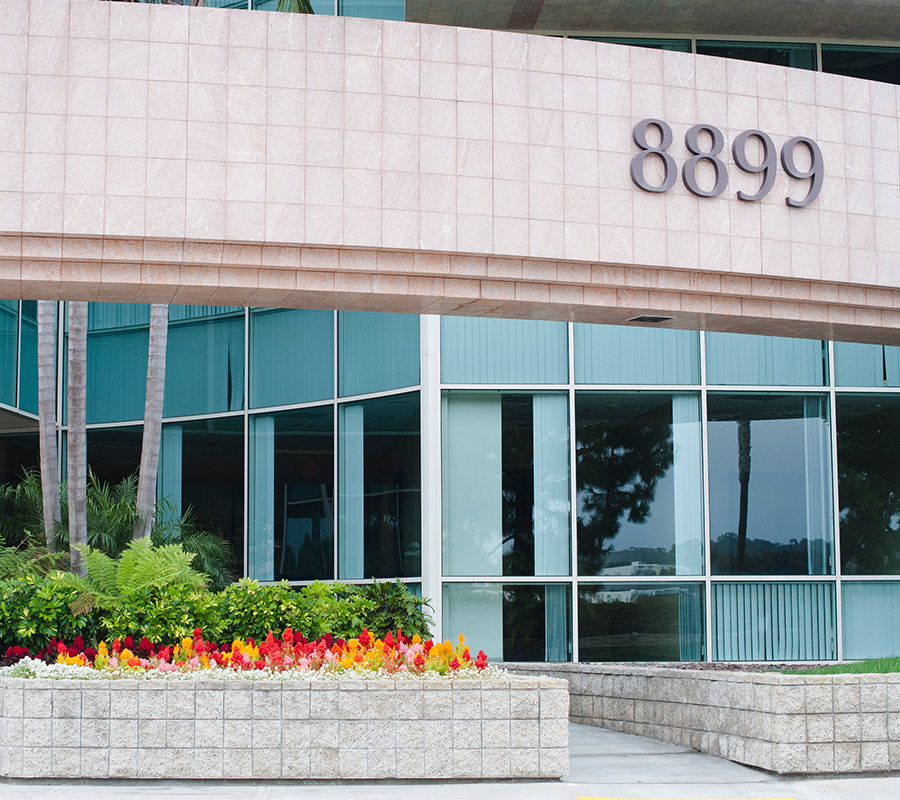
Exterior of the office building at 8899 University Center Lane, home to Center for Dental Health La Jolla in San Diego

Meet the Team

Dr. Sandhya Hegde, D.D.S., B.D.S. founded Center for Dental Health La Jolla on the belief that what happens in the mouth rarely stays separate from what happens in the rest of the body, and that every patient deserves a treatment plan built around their individual needs. Dr. Gary Sigafoos earned his D.D.S. and M.S. in Periodontics from Temple University and has been practicing periodontics in San Diego since 1979, making him one of the region’s most experienced periodontists. He was among the first in San Diego to focus on soft tissue management programs and has been featured on national and local television for his work in this area. 

Dr. Thomas Brislin, our oral surgeon, graduated from Temple University School of Dentistry in 2011 and brings a background that spans academic training and hands-on surgical experience. Dr. Haris Lakisic completed his D.D.S. and M.S. in Endodontics at the University of Pennsylvania, where he graduated magna cum laude in biology. These four clinicians work under one roof, coordinating directly with one another so your implant treatment plan reflects the full picture of your oral health, not just the gap in your smile.

Learn About Your Doctor!

Are you experiencing the effects of missing teeth?

Is Dental Implant treatment right for you?

Not everyone who’s missing a tooth knows what their options are, and not every option is the right fit. The questions below help you think through whether implant treatment makes sense before a dental consultation.

Who is a candidate for Dental Implants?

Good candidates are adults with fully developed jaws, sufficient bone density, and healthy gum tissue. Active gum disease or uncontrolled diabetes needs to be addressed before implant placement can proceed safely. Patients with insufficient bone volume may still qualify after bone grafting. Your overall health and smoking history both factor into candidacy.

What does the Dental Implant process involve?

Treatment begins with a consultation and imaging to map your bone structure and build a plan. The oral surgery team places the implant post, with I.V. sedation available if you’d like to be fully relaxed. After placement, a healing period lets the implant fuse with your jawbone. Once healed, a custom crown finishes the tooth replacement.

Where does Implant treatment fit into your overall plan?

Implant treatment spans multiple visits and may involve more than one specialist. If bone grafting is needed first, that step happens in-office with the same team. Patients can choose oral conscious sedation or I.V. sedation depending on comfort level. You won’t need to coordinate care across separate offices.

When is the right time to consider Dental Implants?

The best time to consider an implant is soon after a tooth is lost, before significant bone loss sets in. Bone begins to resorb once the root is gone, reducing the bone volume available for placement. Implants placed in adequate, healthy bone can last decades with proper care. If you’ve delayed treatment, an evaluation now will show your current bone levels.

Why choose Dental Implants over the alternatives?

Dental implants are the only option that replaces the root as well as the visible tooth. Traditional bridges require grinding down healthy adjacent teeth, while dentures rest on the gum and do nothing to stop bone loss. A comparative cohort study found implant-supported bridges reach a five-year survival rate above 96 percent, versus roughly 94 percent for tooth-supported bridges. Implants also keep neighboring teeth untouched and function much like natural teeth.

Leaving a Gap Has Real Consequences

When a missing tooth goes unaddressed, the bone beneath it begins to shrink and neighboring teeth start to drift. This can lead to bite misalignment, uneven wear, and changes to facial structure over time. A study on post-extraction bone healing found roughly half of alveolar bone width is lost within twelve months, with a third of that bone deterioration occurring in just the first twelve weeks. A single missing tooth can quickly become a bigger problem.

Mature woman wearing glasses and laughing, reflecting the full range of patients who benefit from dental implants in the San Diego community

Our Implant Dentistry Options

Inside Our Approach to Implant Placement

Your First Visit: Reviewing Bone Health and Candidacy

Every case starts with a conversation, not a checklist. Dr. Hegde and the surgical team examine your jaw structure through digital imaging, checking bone density and gum health. Any early signs of gum disease or thin bone get flagged right away, so grafting can be scheduled ahead of time. You’re also welcome to raise any concerns about surgery.

Mapping Out Your Path to a Single Implant or Full-Arch Restoration

No two implant plans look alike. Your plan is shaped by how many teeth are missing, your bone density, and the outcome you want, whether a single implant or a full arch. If a bone graft is needed, it’s scheduled into this same plan rather than added later. The result is a plan built around your mouth and goals.

Surgical Placement, With Sedation Options Available

On surgery day, the oral surgery team positions the titanium post into your jawbone using imaging completed earlier. Local anesthesia, oral conscious sedation, or I.V. sedation are all options depending on your comfort level. Most patients find the appointment goes more smoothly than expected. Once placed, the healing period that lets the post fuse with bone begins right away.

Protecting Your Gum Health While You Heal

Once you’re home, protecting the surgical site is the priority for several days. We’ll show you gentle cleaning techniques so gum tissue heals without irritation, plus tips for managing swelling. Sticking to gentler foods for a short stretch reduces pressure on the site. Avoiding tobacco during this window gives the bone a better chance to fuse with the post.

Confirming Osseointegration Before Your Final Crown

Before attaching your permanent crown, we confirm the post has bonded solidly with your jawbone through follow-up imaging. This step protects your investment, since loading a crown too early raises the risk of complications. Afterward, your implant becomes part of your regular preventive visits, checked alongside the rest of your smile.

Smiling woman resting her chin on her hand at home, representing the confident smile dental implants for Del Mar patients can help achieve

What happens if you do nothing?

The Financial Cost of Waiting

Delaying treatment after tooth loss tends to cost more, not less. As bone volume decreases, implant placement may require preparatory bone grafts or a sinus lift, adding time and expense. Published industry cost research notes 58 percent of implant patients already need a bone graft before placement, a share expected to climb toward 60 percent. Discussing payment options early can help you plan around these costs.

The Health Cost of Untreated Tooth Loss

Bone resorption begins within months of losing a tooth and continues as long as the root is absent. Neighboring teeth shift, disrupting your bite, and nearby gum tissue becomes more vulnerable to disease. A peer-reviewed review links periodontitis to the same inflammatory pathway as cardiovascular disease, with a two-way relationship to diabetes. Untreated tooth loss carries health risks well beyond the mouth.

The Safety Risks of Complex Delayed Procedures

Exposed bone at an untreated extraction site can become a source of infection, and delayed bone loss often requires more complex surgery to correct. Patients who wait may eventually need a sinus lift or extensive grafting, procedures with their own risks. A systematic review found membrane perforation occurs in an estimated 7 to 56 percent of sinus lift cases.

FAQs

Can smokers get teeth implants?

Smoking doesn’t automatically rule out treatment, but it does raise the risk of complications during healing. Nicotine restricts blood flow to the gum tissue, which can slow how well the post fuses with the surrounding bone. Many patients quit or cut back in the weeks around surgery to improve their odds of success. Dr. Hegde’s team will go over this during your evaluation.

Will my dental implants look natural?

Yes, the crown is custom-shaped and shaded to match the teeth around it, so it blends into your smile rather than standing out. Because the post sits in your jawbone just like a natural root, it also supports your lips and cheeks the way your original tooth did. Most patients say people can’t tell which tooth is the implant.

What if a dental implant fails?

Implant failure is uncommon, but it can happen, usually from infection, insufficient bone, or excess force on the restoration. If a post doesn’t integrate properly, it’s typically removed, the site is allowed to heal, and a new implant can often be placed later. Catching problems early during follow-up visits makes a second attempt more likely to succeed.

Is there an age limit for dental implants?

There’s no strict upper age limit. Plenty of patients receive implants well into their 70s and 80s as long as they’re in reasonably good health. The main requirement is a fully developed jawbone, which is why implants usually aren’t placed until a patient’s late teens. Your overall health matters more than the number on your birth certificate.

How long is recovery after implant surgery?

Most patients are back to their usual routine within a couple of days, though the surgical site needs a few weeks to settle down. Full integration between the post and your jawbone typically takes two to six months before a permanent crown is attached. Following your aftercare instructions closely helps keep that timeline on track.

Decorative tooth and lotus flower icon representing gentle, patient-centered implant dentistry care

Get the Dental Implants in Del Mar Smiles Are Built On!

Our dental implants in Del Mar residents trust start with a coordinated team that treats your whole mouth, not just the gap in your smile. Dr. Sandhya Hegde, D.D.S., B.D.S., and the specialists at Center for Dental Health La Jolla are ready to help you take the next step toward a full, confident smile. Updates are posted regularly to Facebook and Instagram. Have questions? Reach out today to go over your options and dental needs.

Book Your Cosmetic Dentistry Consultation Today

Save $333 on Clear Aligners Treatment

Includes complimentary consultation ($250 value) Board Certified Orthodontic Care

*Please note this offer is not eligible with Cherry financing.

Contact Us